 MoonGyeol
Cognitive decline
If you feel your memory or information-processing ability has recently declined, or mild cognitive impairment is suspected, your current cognitive status can be evaluated and treatment options reviewed together.
PBM (Photobiomodulation) is a non-invasive method that uses light of specific wavelengths to modulate the biological responses of cells.
Research is ongoing into how near-infrared light affects cellular energy metabolism, mitochondrial function, cerebral blood flow, and nerve cell function.
At MoonGyeol, we selectively use PBM based on research into cognitive function and brain health, according to each patient's condition and treatment goals.
If you feel your memory or information-processing ability has recently declined, or mild cognitive impairment is suspected, your current cognitive status can be evaluated and treatment options reviewed together.
If reduced concentration or a persistent foggy-headed feeling continues, we look at cognitive, emotional, and sleep status together and, where appropriate, consider it as a supportive treatment method.
PBM's potential for cognition, behavior, sleep, and brain function is being studied in children with neurodevelopmental characteristics such as autism spectrum disorder.
If you notice changes in memory or cognitive function with age, your current status can be evaluated and various management approaches reviewed.
When cognitive change is accompanied by depressed mood, anxiety, stress, or sleep problems, we evaluate the overall condition and plan any needed treatment together.
※ Whether PBM is applied depends on the patient's condition and treatment goals.
Light of a specific wavelength is directed at the target area.
The light is being studied for its potential effects on various biological processes within cells.
Effects on mitochondrial function and cellular energy metabolism are one of the main areas of PBM research.
Effects on cerebral blood flow, nerve cell function, inflammatory response, and cognitive function are being studied.
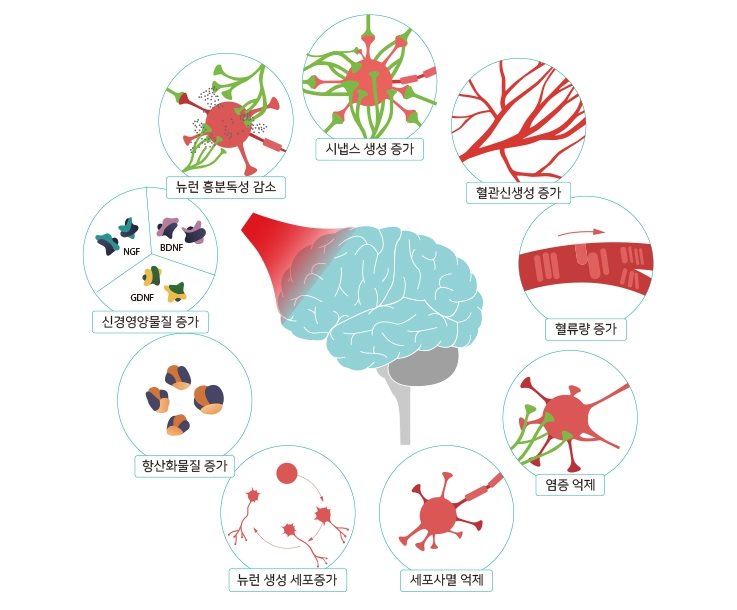
A wide range of research on PBM is underway, centered on its effects on brain health, cognitive function, and nervous system function. In particular, its potential is being studied across several areas, including cognitive decline and neurodegenerative disease, and depression, anxiety, and sleep problems.
At MoonGyeol, we comprehensively evaluate each patient's condition and treatment goals, and where appropriate, selectively use PBM as a supportive treatment method.
QEEG, cognitive function and attention assessment, etc.
The number and duration of sessions are decided according to each individual's condition and treatment goals.
Where needed, we check changes in cognitive function, attention, sleep, and emotional state before and after treatment, adjusting the treatment plan accordingly.
Yes.
Where needed, it can be given alongside existing medication or psychotherapy, and depending on the patient's condition, it may also be combined with non-drug treatments such as Biofeedback or TMS.
PBM can be used as one option among the treatments needed to build a comprehensive plan for each patient.
Q. What kind of treatment is PBM?
It is a non-invasive method that uses light of specific wavelengths to modulate the biological responses of cells. Its effects on brain health, cognitive function, and neurological function are being studied.
Q. Is it painful, or does it involve injections?
PBM is performed non-invasively, without cutting the skin or skull or using injections.
Q. Can it help with memory or concentration?
PBM's potential effects on cognitive function and concentration are being studied. Your current cognitive and attention status can be evaluated, and where appropriate it can be considered as a treatment option.
Q. Can it be used for depression or anxiety?
The potential use of PBM for emotional symptoms such as depression and anxiety is also being studied. We comprehensively evaluate your symptoms and treatment history, and where appropriate consider it alongside existing treatment.
Q. How many sessions are needed?
This is planned individually based on treatment goals and current condition. The number and duration of sessions can be adjusted as we check the changes during treatment.
We'll look at your cognitive, emotional, and sleep status together and, where appropriate, suggest PBM care.