 MoonGyeol
Treatment-resistant depression
Insufficient improvement despite two or more adequate antidepressant treatments
Esketamine
A new treatment option for treatment-resistant depression
Have you had enough treatment for depression,
yet the low mood and lack of energy just continue?
When symptoms don't improve sufficiently despite two or more adequate antidepressant treatments, treatment-resistant depression can be considered.
In this case, it's worth re-evaluating prior treatment and, if needed, considering a new treatment with a different mechanism of action from existing antidepressants.
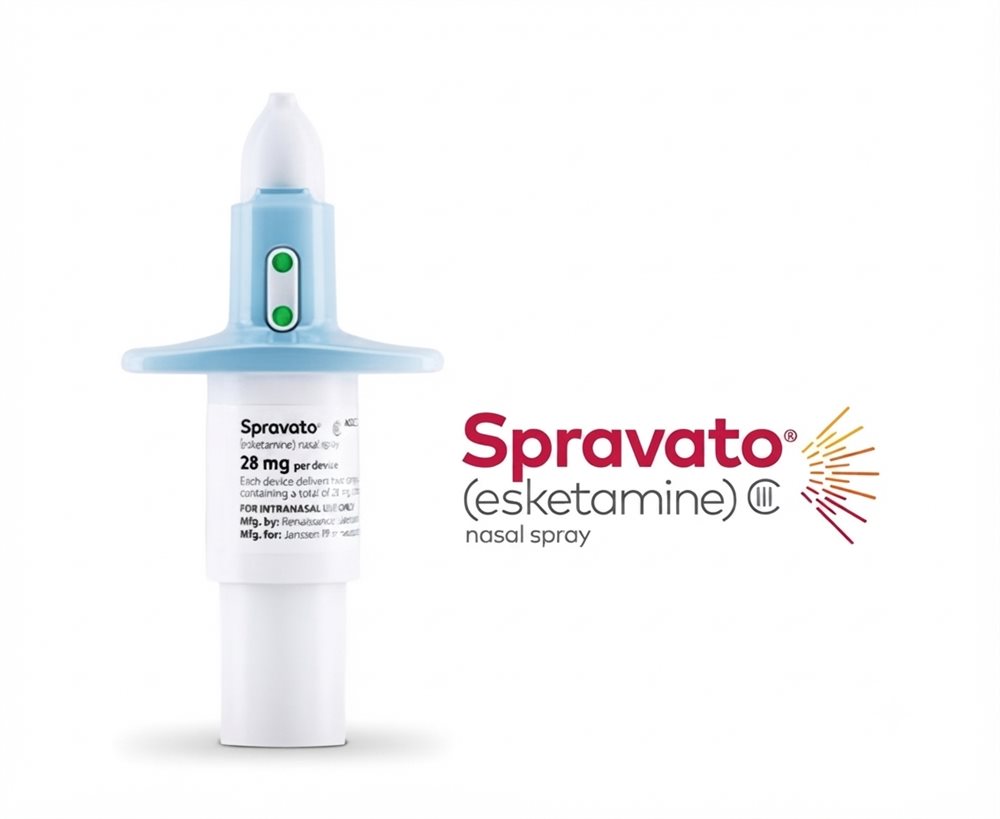
Esketamine is a nasal-spray treatment to consider for treatment-resistant depression.
Esketamine works through a different mechanism than conventional oral antidepressants, and some patients show relatively rapid improvement in depressive symptoms.
In clinical studies, improvement in depressive symptoms was observed within 24 hours of starting treatment, with further improvement continuing over the following 4 weeks. In some clinical studies, the remission rate at day 28 was reported at 52.5%.
24 hours
Point at which early symptom improvement was observed
28 days
Treatment effect and remission evaluated in clinical studies
52.5%
Proportion of patients reaching remission at day 28 in a specific clinical study
※ These are clinical study results, and individual treatment response and degree of effect may vary.
Insufficient improvement despite two or more adequate antidepressant treatments
Low mood, lack of energy, and reduced interest that continue despite consistent medication
Several treatment methods have been tried but symptoms have not improved enough, warranting review of a new treatment strategy
When severe depressive symptoms or suicidal ideation are present and more active treatment is needed, the patient's condition is comprehensively evaluated to consider treatment options including Esketamine.
Esketamine is a treatment that affects depressive symptoms through a mechanism of action different from typical antidepressants.
Unlike conventional antidepressants, which mainly regulate neurotransmitters such as serotonin and norepinephrine, Esketamine acts on the glutamate system, including NMDA receptors.
Because of this distinct mechanism, it is used as a new treatment option in treatment-resistant depression that has not responded sufficiently to existing antidepressant treatment.
It is also administered as a nasal spray rather than a pill.
Checking current depressive symptoms, suicidal ideation, past treatment history, current medications, and overall physical condition.
The medical team comprehensively determines whether Esketamine treatment is appropriate for your current condition.
A set dose of Esketamine is administered via the nasal route.
Blood pressure, level of consciousness, and physical/psychological changes are checked under medical observation for a set period after administration.
Changes in depressive symptoms and any response or side effects during treatment are checked, and the treatment plan is adjusted going forward.
Esketamine is a treatment option that can show relatively rapid changes in depressive symptoms after administration in some patients.
In clinical studies, improvement in depressive symptoms was observed at 24 hours after the first dose, with further improvement continuing over the following 4 weeks.
However, not every patient experiences the same effect, and treatment response can vary by individual.
The following temporary symptoms may occur during treatment.
For this reason, medical observation is required for a set period after administration.
Esketamine treatment is carried out within the patient's overall depression treatment plan.
Whether to maintain or adjust the antidepressants you are currently taking is decided by the medical team, taking into account your condition and treatment history.
You should not stop or change your medication on your own.
At MoonGyeol, we don't simply add a new medication.
We carefully evaluate what treatments you've had so far, whether they were adequate, and how your depressive symptoms are currently persisting.
If Esketamine treatment is judged to be appropriate, we decide together whether to combine it with existing treatment and how to plan it.
Throughout treatment, we continuously monitor depressive symptoms and side effects and adjust the direction of treatment accordingly.
Q. Is Esketamine different from typical antidepressants?
Yes. It works through a different mechanism than conventional oral antidepressants, and can be considered as a new treatment option in treatment-resistant depression.
Q. How quickly does it work?
In clinical studies, improvement in depressive symptoms was observed from 24 hours after administration, with further improvement continuing up to 4 weeks. However, the degree and timing of effect vary by patient.
Q. What is the remission rate?
In a specific clinical study, the remission rate at day 28 of treatment was reported at 52.5%. This is a result confirmed in a clinical study and does not occur identically in every patient.
Q. Can I go straight home after receiving Esketamine?
It is not a treatment where you return to daily activities immediately after administration. Drowsiness, dizziness, dissociation, and blood pressure changes may occur after administration, so medical observation is required for a set period. In fact, Spravato treatment centers advise monitoring for about 2 hours after administration.
Q. Do I need to stop my existing antidepressant during treatment?
Whether to maintain or change existing medication is decided by the medical team according to your treatment plan. You should not stop medication on your own.
Q. Can it be used for all types of depression?
No. Esketamine is not a treatment used for every patient with depression — it is selectively considered, particularly in treatment-resistant depression, after comprehensively evaluating the patient's treatment history and current condition.
We'll evaluate your treatment history and current condition together and suggest an appropriate treatment strategy.