 MoonGyeol
MCI (Mild Cognitive Impairment) Risk Screening Assessment
MCI Screening Assessment
Checking current cognitive function and MCI risk through EEG
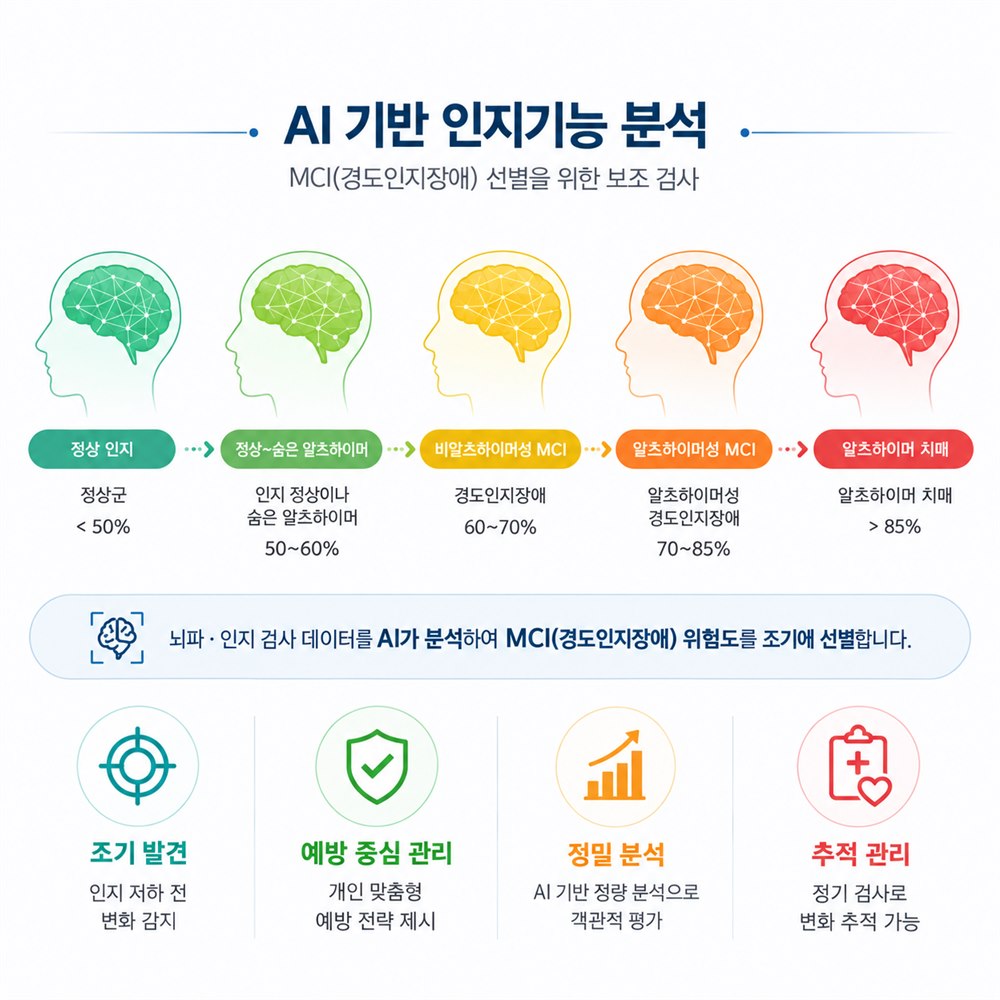
If your memory doesn't feel like it used to, or you struggle to recall something even after hearing it repeated, it's worth checking whether this is simply part of normal aging or the start of a cognitive change.
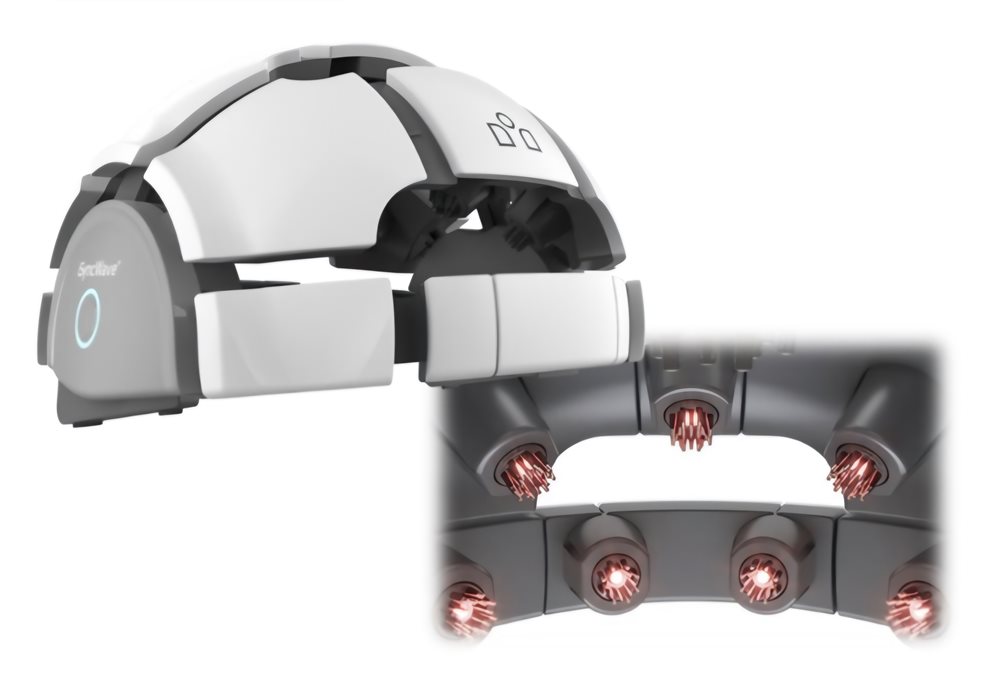
At MoonGyeol, we measure EEG with iSyncWave® and analyze it with iSyncBrain® to look at current brain function and EEG characteristics related to mild cognitive impairment (MCI).
Recommended for
- Those aged 50 or older who want to check their cognitive function proactively
- Those who feel their memory or concentration has declined recently
- Those who frequently forget important appointments or belongings
- Those who struggle to find words or feel their thinking has slowed
- Those who have heard family members mention memory decline
- Those worried about cognitive decline in a parent or family member
- Those who want to objectively check their current cognitive status
- Those who want to regularly compare and manage cognitive changes over time
This isn't a simple memory test
Mild cognitive impairment isn't diagnosed simply by “forgetting things.”
It refers to a state where cognitive function has declined from before, but independence in daily life is maintained; in some cases it can progress to dementia, which is why early detection of cognitive change matters.
EEG analysis is a supportive, objective assessment method that can be used to evaluate this kind of cognitive change.
EEG analysis + cognitive function assessment + specialist consultation and symptom evaluation
are combined to look at your current condition.
Can EEG screen for MCI?
At MoonGyeol, EEG is measured with iSyncWave®, and iSyncBrain® analyzes EEG characteristics and cognition-related indicators according to age and sex.
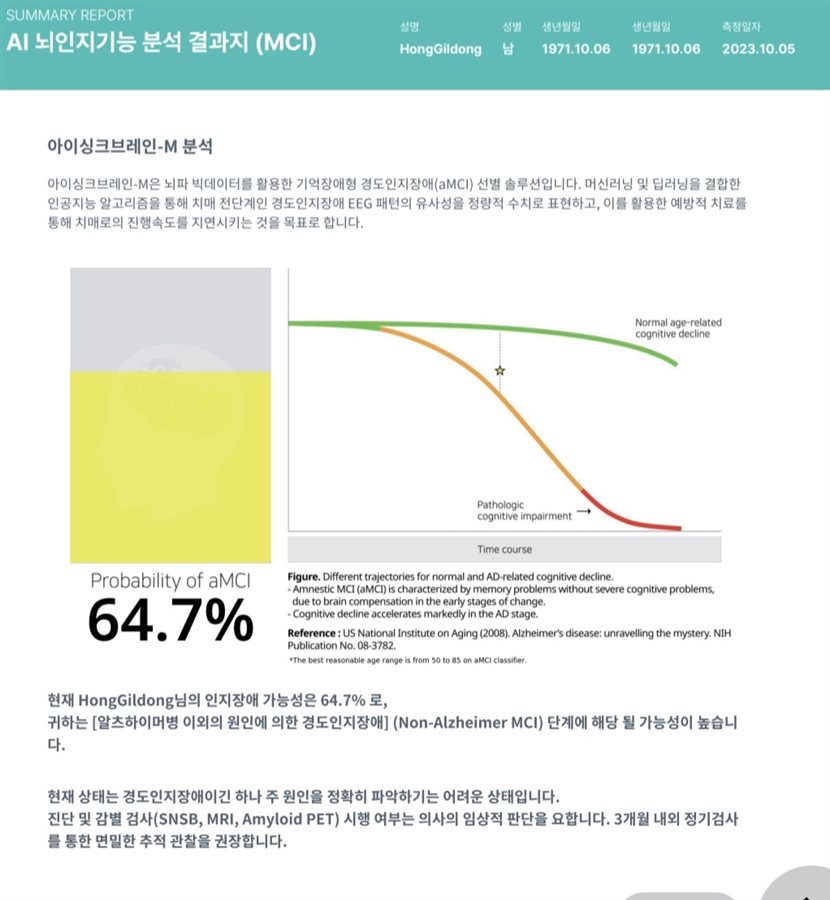
iSyncBrain® also includes an analysis feature for screening amnestic mild cognitive impairment (aMCI), which can be used as a supportive assessment for MCI screening.
We use this EEG-based analysis technology, validated through clinical studies, to look at current brain function more objectively.
A short, simple test
The dry EEG measurement method allows the test to be performed without a separate gel application process.
From preparation through EEG measurement, analysis, and checking results, it can be completed within about 5–10 minutes, making it easy on the patient.
It can be used not only for a first check of cognitive function, but also to compare and manage changes over time.
How are results reviewed?
The measured EEG is analyzed against age- and sex-based norms. This allows a comprehensive look at the following.
- The overall current state of the EEG
- EEG characteristics related to cognitive function
- EEG characteristics by brain region
- EEG patterns related to mild cognitive impairment
- Findings suggesting additional cognitive assessment is needed
Where needed, additional cognitive assessments such as a comprehensive neurocognitive test are performed, evaluating the EEG analysis results together with actual cognitive performance.
What matters is checking ‘now’
Cognitive change doesn't begin suddenly one day.
At first, it may just feel like, “I've been a bit forgetful lately.”
Rather than dismissing this as simply due to age, objectively checking your current cognitive status now establishes a baseline you can compare against if changes occur later.
At MoonGyeol, we do not diagnose mild cognitive impairment or dementia from a single test result.
We check your current cognitive status and, where needed, help this lead to further cognitive assessment and follow-up.
Test duration
About 5–10 minutes. Preparation → EEG measurement → analysis → results, completed in a relatively short time.
※ This test does not diagnose mild cognitive impairment or dementia on its own — it is intended to support the clinical judgment of a specialist. Additional neurocognitive testing or consultation may be needed depending on the results.
Find out if this screening is right for you
We'll look at your current symptoms and condition together and suggest the assessment you need.